Home  News 3DtoMe supports seeMote
3DtoMe supports seeMote
spatial computing
3DtoMe
seemote
dfrobot
Apple Vision Pro
visionOS27
spatial accessories
spatial collaboration
Siri AI
Published on
14/09/2026
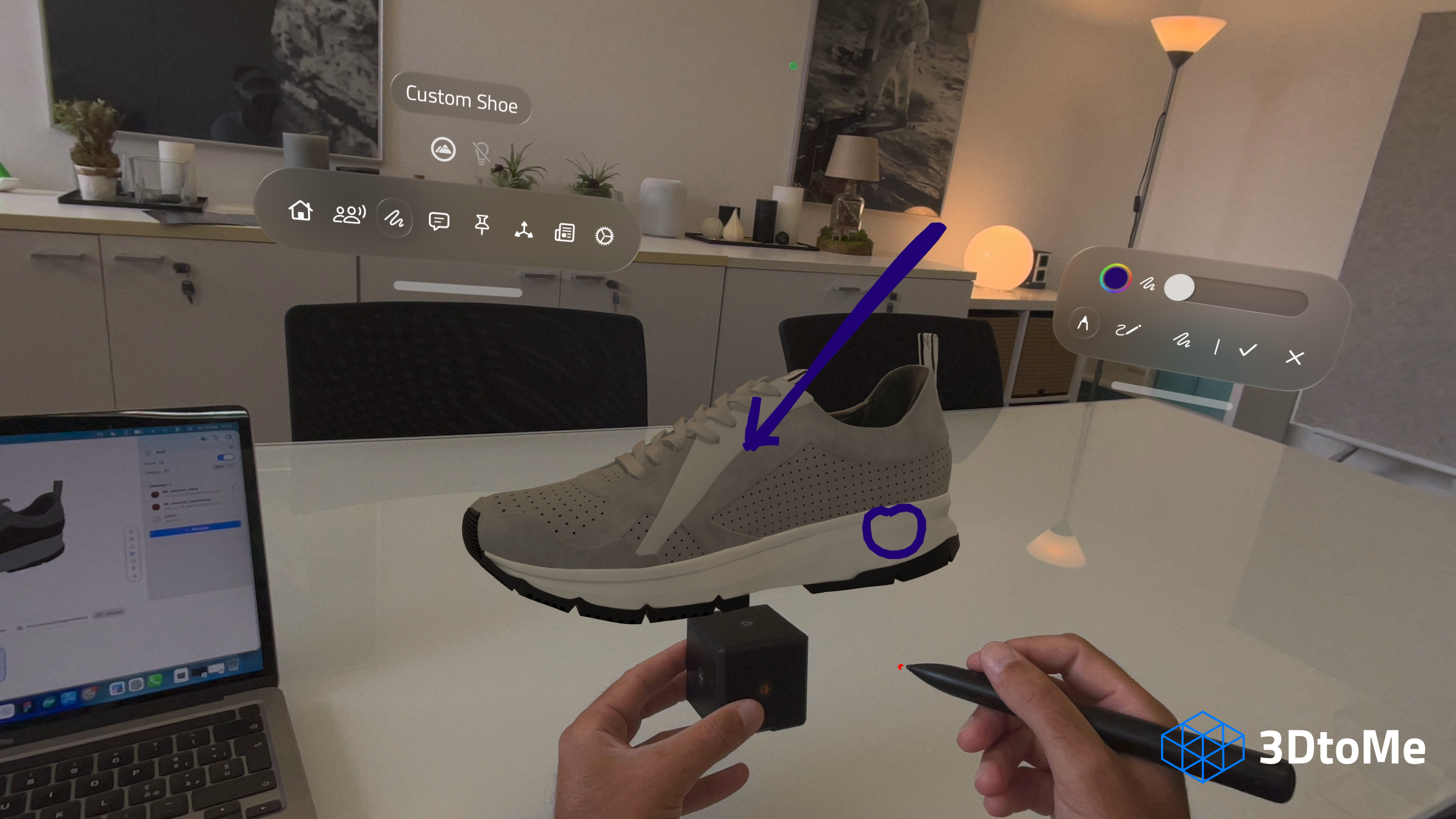
3DtoMe controlling a Spatial Computing presentation with seeMote Cube on Apple Vision Pro
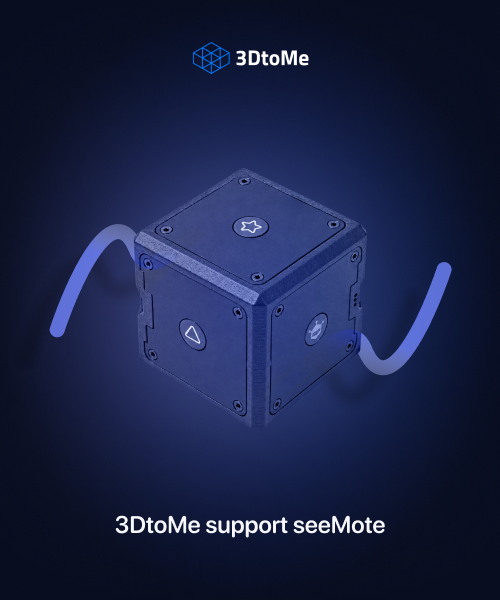
3DtoMe now supports seeMote Cube, the new Spatial Accessory developed by DFRobot for Apple Vision Pro and visionOS 27.
The integration introduces a tangible way to control and explore 3D content. seeMote can operate both as a programmable physical controller and as a persistent spatial anchor, keeping a virtual object continuously aligned with the device as it moves and rotates in space.
Physical control for 3D content
Each physical button can be programmed for a specific workflow or use case. With 3DtoMe, users can:- Start animations directly from a physical button.
- Activate an exploded view to inspect the individual components of a 3D model.
- Select components, change viewpoints or move between presentation steps.
- Switch between product configurations, materials, finishes and technical variants while keeping the model anchored.
- Use haptic feedback to confirm actions without interrupting the spatial experience.
- Control 3D content during presentations, reviews and collaborative sessions.
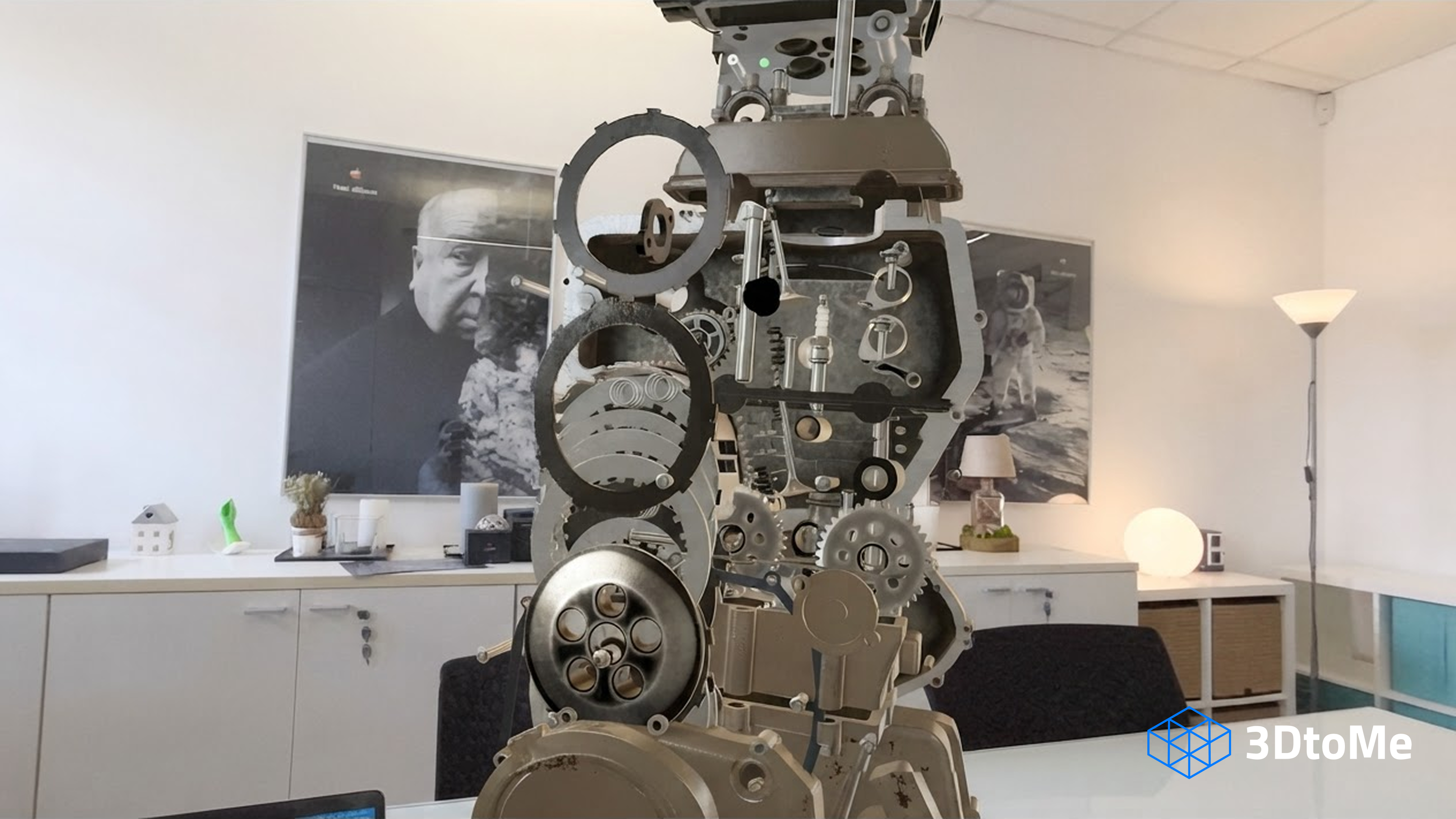
seeMote and Logitech Muse, working together
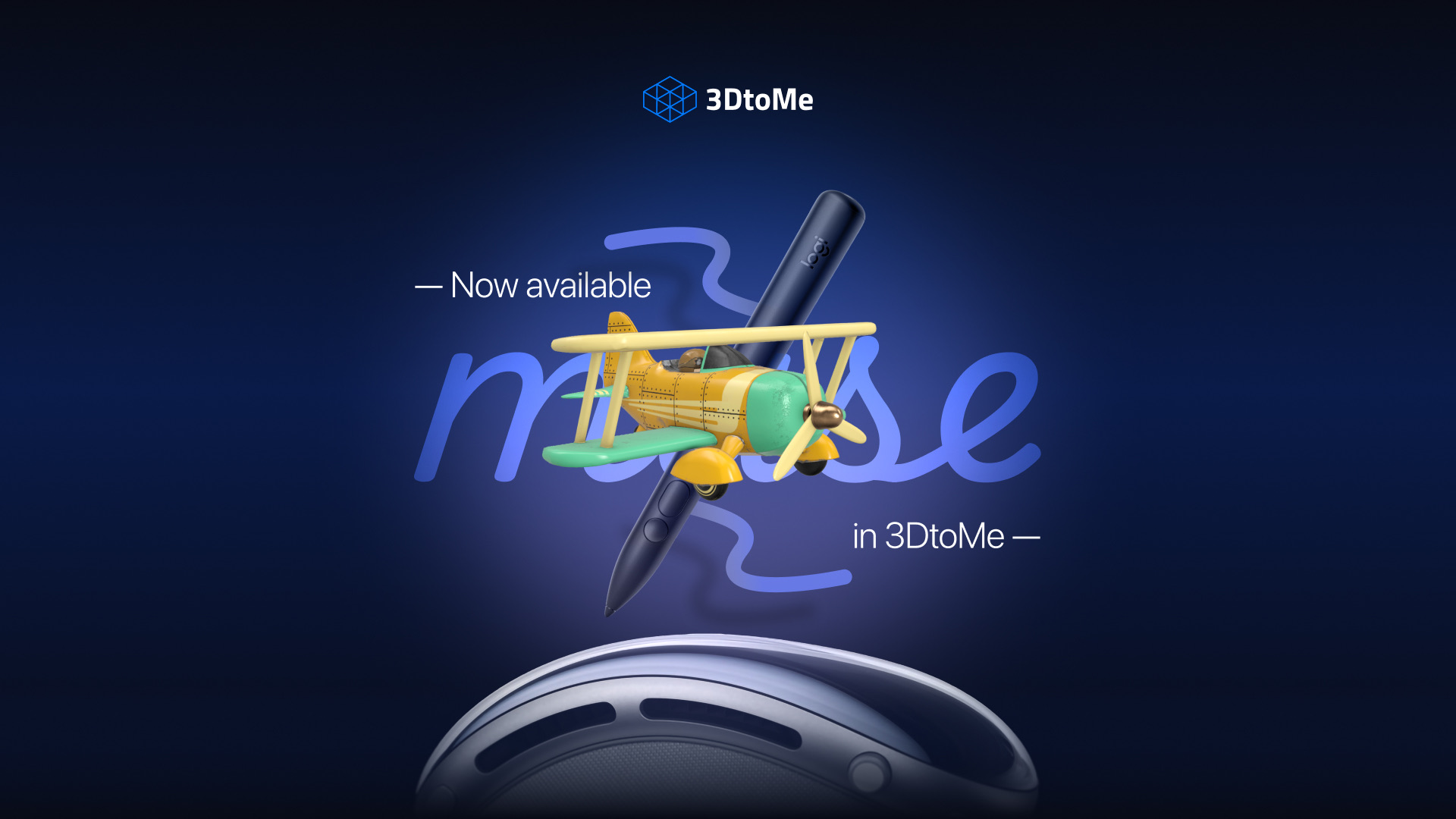
Support for seeMote does not replace Logitech Muse. Users can continue using the Muse digital pencil to point, annotate, draw and interact with content while the 3D model remains anchored to seeMote.This combination separates two important interaction roles: seeMote maintains the model's physical reference in space, while Muse provides a precise tool for direct input. Together, they create a more flexible workflow for presentations, design reviews and collaboration.
Product information powered by Siri AI
Alongside Spatial Accessories, we have also integrated Siri AI and the new Apple Intelligence capabilities available with visionOS 27.This enables users to access contextual information about the device, the displayed product and its available configurations directly within the spatial experience. We will explore this integration in a dedicated news article soon.
For dilium, this is another step toward Spatial AI: experiences where intelligent assistance, physical input and spatial content work together naturally.
"The real value of Spatial Computing emerges when people can choose the most effective interaction for each task. seeMote provides a stable physical anchor, Muse adds precision and Siri AI introduces contextual intelligence. Bringing these elements together makes 3D content easier to understand, present and use." - Donato De Ieso, CEO of dilium
Our work on spatial technologies
This integration is the result of continuous research, prototyping and testing across hardware, software and user experience.Our work on 3DtoMe, Spatial Drawing and Spatial Companion helps us explore how physical accessories, natural interaction and intelligent systems can support professional Spatial Computing workflows.
We are investing in these technologies to make complex 3D content more accessible across product presentations, technical reviews, training, education and collaborative work.
"We are not adding technology for its own sake. Every integration must reduce friction and give users a clearer, more direct way to work with spatial content." - Donato De Ieso, CEO of diliumWe would like to thank DFRobot for its support throughout the integration and testing process.
Want a demo or want to experience Spatial Computing?
Contact us and discover how 3DtoMe can support your products, presentations and collaborative workflows.
News
Discover other news